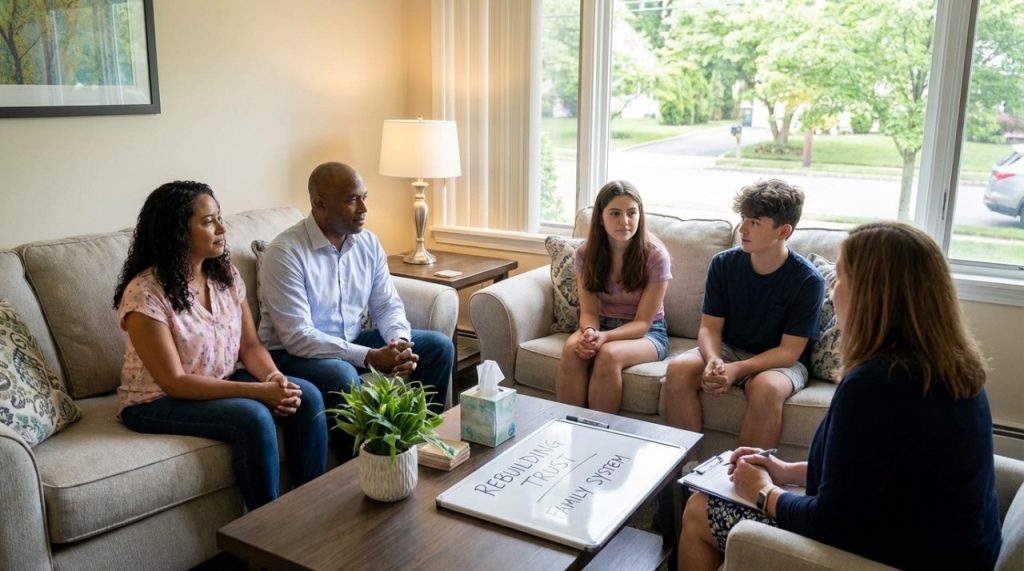
You have the same argument on a Tuesday night, and by the end, neither of you remembers how it started. Or the house goes quiet after the kids are asleep, and the two of you sit at opposite ends of the couch with nothing left to say.
Some couples come to us after one painful rupture. Others come after years of small ones, when partners have slowly turned into polite roommates.
Family conflict looks similar from the inside. A teenager stops answering questions. Two parents disagree on every rule. Someone leaves the room the moment a hard subject comes up.
We provide marriage counseling, couples therapy, and family counseling from our office on Kinderkamack Road in River Edge, and by telehealth across New Jersey.
How Couples and Family Counseling Works at Equality Mental Health
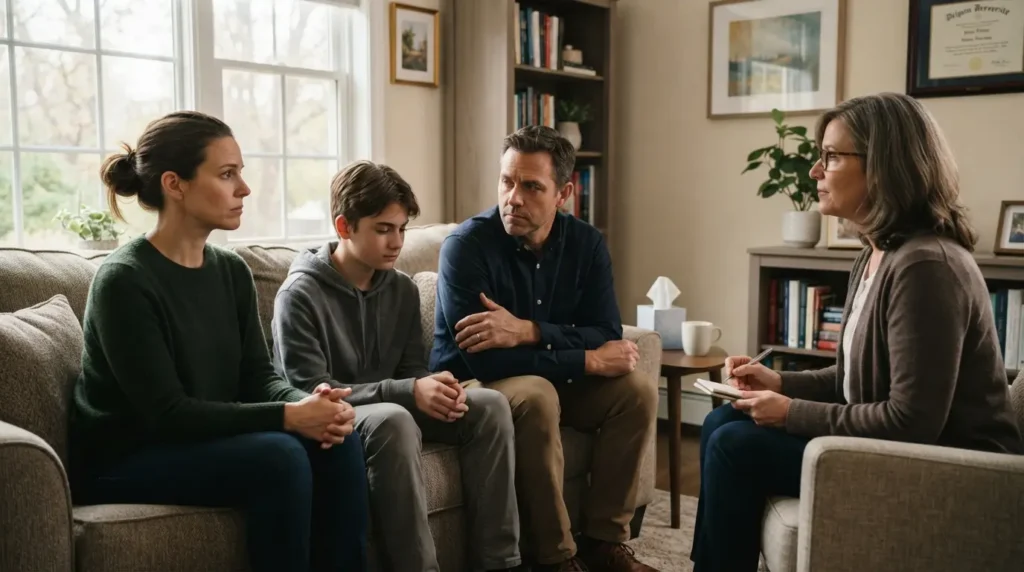
Our work focuses on the relationship itself, not who is to blame. We pay attention to the pattern you fall into, where it starts, and what it protects.
1. The First Call: You call our River Edge office and tell us briefly what is going on. We answer questions about scheduling, insurance, and how we match couples with a therapist.
2. Your Intake Session: Both partners attend together where possible. We ask about your history together, what changed, and what each of you hopes to get out of the work.
3. Mapping the Pattern. Over the next few sessions, your therapist traces the cycle underneath the arguments. Most couples find their fights have far fewer causes than they assumed.
4. Weekly Sessions and Practice at Home: Sessions run 45 to 60 minutes, usually weekly at the start. Your therapist may suggest something small to try between visits, such as a different way to open a hard conversation.
5. Reviewing Where the Work Stands: You and your therapist set goals early and revisit them together. Some couples do focused short-term work, and others stay longer when trauma, betrayal, or long-standing conflict is part of the picture.
What Couples and Families Bring to Us
These are the concerns we hear most often from couples and families across Bergen County.
- Conflict that repeats. The same disagreement returns every few weeks in a new outfit. Relationship conflict resolution therapy focuses on the cycle, not the surface topic.
- Conversations that stop working. One partner presses, the other withdraws, and both feel unheard. Therapy for communication difficulties focuses on that exact loop.
- Infidelity and broken trust. Physical affairs, emotional relationships outside the couple, or secret contact online. Infidelity and loss of trust therapy gives that conversation a structure, and our article on what cheating does to a relationship covers the early weeks.
- Parenting and co-parenting differences. Two households, two rule sets, or one child whose behavior worries both parents.Parenting and family problems therapy helps caregivers get on the same page.
- Pressure from outside the relationship. A new baby, a job loss, a move, an aging parent who now needs care.
- Emotional distance and control. Resentment, silence, or a dynamic that has started to feel one-sided. Our guide to the signs of emotional abuse may help you name it.
We work with married couples, dating and engaged partners, blended families, LGBTQ2+ couples and families, and multi-partner relationships. Engaged couples often come to us for premarital counseling before anything is wrong, which is a reasonable use of the room. Our LGBTQ2+ affirming therapy is central to how this practice was built, not an add-on.
Who You Will Work With at Our River Edge Office
H. Craig Cutler, LCSW, NCPsyA, founded Equality Mental Health and serves as its president. He is a licensed clinical social worker and certified psychoanalyst with more than 20 years in private practice, and he has held leadership roles at mental health institutions across New Jersey.
Our staff includes clinicians at the master’s and doctoral levels, both licensed and license-eligible. Psychiatric consultations are available by referral from one of our clinicians. You can meet the therapists at Equality Mental Health or read about how we work.
What Happens in Your First Couples Counseling Session
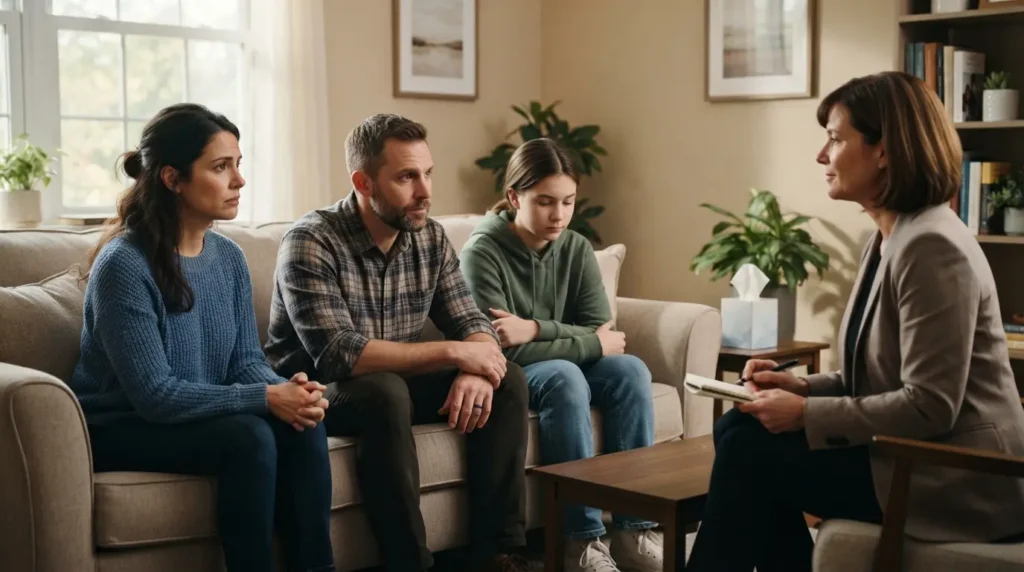
The first session is a conversation, not an evaluation of who is right.
Both partners attend together whenever possible, and the session runs 45 to 60 minutes. We send intake paperwork ahead of time so the hour goes to talking, not forms.
Your therapist will ask what brought you in now, what the pattern looks like at home, and what each of you would want to be different. You are not asked to relitigate old arguments in front of a stranger.
We stay neutral. We do not assign fault, and we do not push a couple to stay together or separate.
By the end, you and your therapist agree on a starting point and a schedule. If a different clinician here is the better match, we tell you and arrange it.
Insurance and Fees
We accept most major insurance plans and offer a sliding scale based on eligibility and scheduling availability.
Coverage for couples and family sessions depends on your plan and on how sessions are billed. Call your insurer to ask about your outpatient behavioral health benefit, your deductible, your copay, and whether a referral is required. Copays are due at the time of service.
Call us at 201-885-3522, and we will walk through it with you, or see the insurance plans we accept and our sliding scale.
Couples Counseling Near You in Bergen County, NJ
Our office sits at 852 Kinderkamack Road in River Edge, a short drive from most of central and northern Bergen County. Sessions are also available by telehealth anywhere in New Jersey, which helps when partners come from different workplaces. See our guide to online therapy across New Jersey.
We see couples and families from across the county, including:
- Couples counseling for Tenafly families
- Therapy for couples in Closter
- Family counseling in Glen Rock
- Cresskill, NJ
You can see every town we cover on ourareas we serve page.
Frequently Asked Questions
How long does couples counseling take in Bergen County?
Length varies by couple and by what brought them in. Many couples meet weekly for 45 to 60 minutes, then review progress with their therapist somewhere around the eighth to twelfth session. Concerns involving trauma, infidelity, or long-standing conflict often call for longer work. Your therapist sets goals with you early on.
Does insurance cover couples counseling in New Jersey?
Coverage depends on your plan and on how sessions are billed. We accept many major plans, including Aetna, Cigna, Horizon Blue Cross Blue Shield, Optum, Medicare, and Medicaid, and we offer a sliding scale based on eligibility. Call your insurer about your outpatient behavioral health benefit, or call our River Edge office, and we will help you check.
Can counseling help after infidelity?
Couples therapy after infidelity creates a structured space for accountability, for the emotions on both sides, and for rebuilding honesty at a workable pace. Therapy does not erase what happened. It gives both partners a place to understand it and to decide what they want next. Our Bergen County therapists also offe infidelity and loss of trust therapy.
What if only one partner wants to start counseling?
Couples work usually involves both partners, though many people start on their own. A therapist can work with one partner on communication, boundaries, and their own responses, and the second partner can join later if both agree. Sessions are available in person in River Edge or by telehealth across New Jersey.
What is the difference between family therapy and marriage counseling?
Marriage counseling focuses on the couple relationship. Family therapy brings in children, parents, or other household members, sometimes several at once. Both focus on patterns of communication, conflict, and emotional safety rather than one person’s symptoms. Some families use both at different stages, and your therapist can advise on the fit.
Book a Consultation for Couples or Family Counseling in River Edge, NJ
Every relationship hits stretches like this. What matters is having somewhere to take it.
Call Equality Mental Health at 201-885-3522 to book a consultation for marriage counseling, couples therapy, or family counseling. We are at 852 Kinderkamack Road, Second Floor, River Edge, NJ 07661, with telehealth appointments throughout New Jersey.
Prefer to write first? Request a couples counseling appointment through our contact form.

H. Craig Cutler, LCSW, NCPsyA is the founder and president of Equality Mental Health, LLC, and a licensed clinical social worker and certified psychoanalyst with over 20 years of experience in private practice. He provides psychotherapy, clinical supervision, and psychoanalytic training, and has held leadership roles at major mental health institutions throughout New Jersey.