We offer In-Person & Telehealth Psychotherapy Services
Call today to schedule your appointment! 201-885-3522. We are here for you.

Communication Difficulties Therapy for Teachers and Government Employees
You’re talking, but it doesn’t feel like you’re being heard. Or you stop talking because every conversation turns into tension.
We help you break the cycle of tension, communicate clearly without escalation, and rebuild a sense of understanding and connection in your relationship.
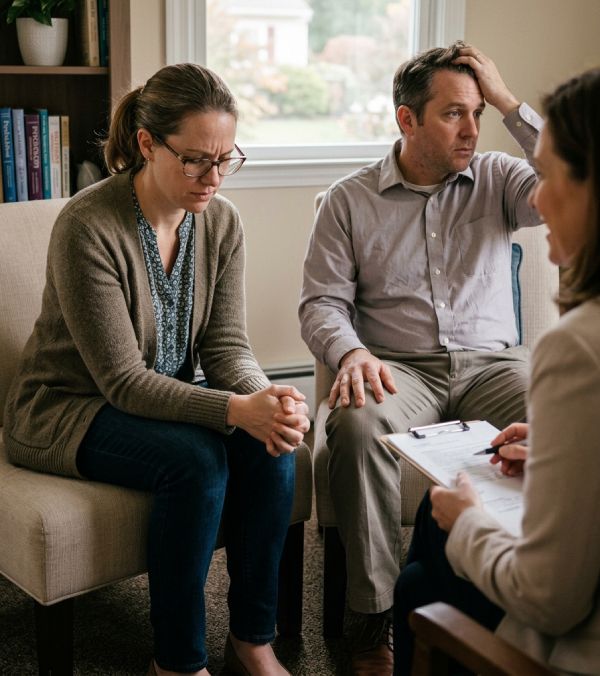
When Work Stress Follows You Home,
Communication Breaks Down
For many teachers, school staff, and state or government employees in Bergen County, communication problems don’t start at home – they build from stress, emotional fatigue, and carrying responsibility all day. You spend your work hours staying measured, professional, and responsive. Then you get home and you have nothing left. A simple question can feel like pressure. Feedback can feel like criticism. Silence can feel like rejection.
Communication difficulties don’t mean you don’t care. They usually mean the relationship has lost a safe way to talk – especially when emotions run high.
At Equality Mental Health, we provide therapy for communication difficulties in River Edge and Bergen County, NJ for professionals who need a space to reset patterns, say what they mean without escalation, and feel closer again.
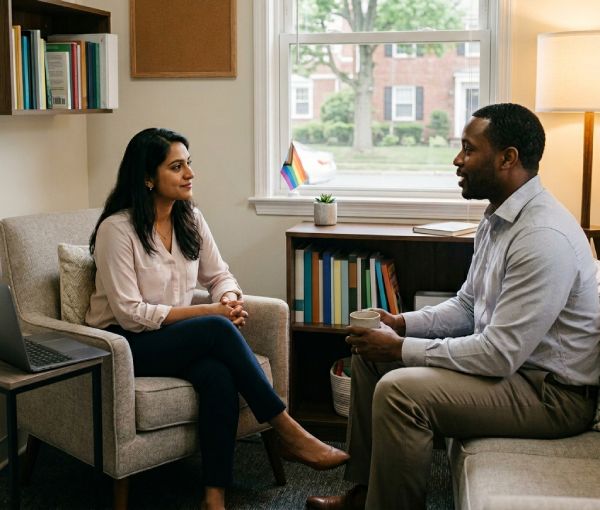
Communication Therapy That Respects Privacy And Public-Facing Careers
If you work in education or government, confidentiality matters. So does discretion. Therapy is a private, professional setting where you can speak honestly without fear of being judged or blamed.
We offer in-person sessions in River Edge and secure telehealth across New Jersey, so you can choose what fits your schedule. Many clients prefer appointments that work around the school day, shift schedules, long commutes, and family responsibilities.
Our practice is inclusive and affirming. Identity, culture, sexuality, gender, and relationship structure are welcomed parts of the conversation – never topics you have to explain or defend.
What Communication Problems Often Look Like
Most people think “communication issues” means not talking enough. In reality, communication difficulties usually mean you’re talking in ways that don’t land – or you’re protecting yourself from conflict by shutting down.
Common patterns include:
- Talking in circles without resolution
- Misunderstandings that escalate fast
- One partner pursuing while the other withdraws
- Defensiveness, sarcasm, or constant correcting
- Feeling criticized, dismissed, or not taken seriously
- Avoiding hard topics until they explode
- “I’m fine” when you’re not fine
- Text arguments that go farther than you intended
- Calm on the surface, resentment underneath
If this has become your normal, it can start to feel like you’re living with a coworker instead of a partner. Or like your family is always on edge.
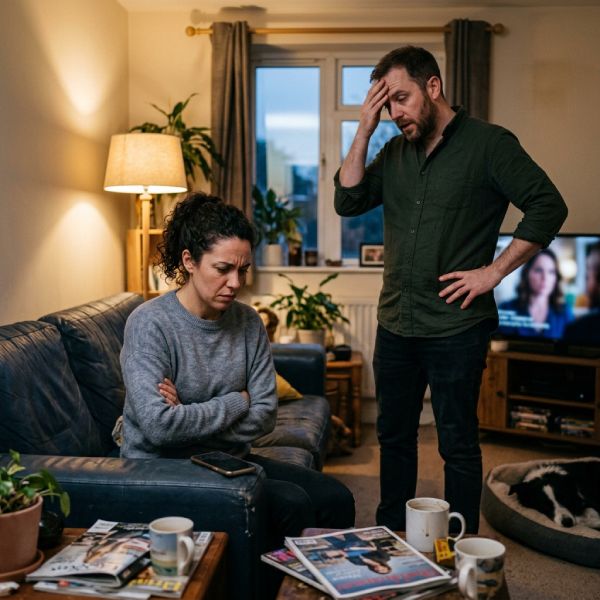

Why These Issues Happen More In High-Demand Roles
Teachers and public employees often carry emotional labor all day. You’re managing behavior, conflict, deadlines, and expectations from leadership and the public. You may be “on” for hours with little privacy. That can create a predictable pattern at home:
- You come home depleted and less patient
- Your partner wants connection, you want quiet
- A small comment becomes a bigger fight
- You shut down to keep the peace
- Then resentment builds because nothing changes
Therapy helps you protect your relationships from the spillover of work stress, without shaming you for being tired.
What We Focus On In Communication Difficulties Therapy
This work is not about learning “perfect phrasing.” It’s about changing the dynamic so conversations become safer, clearer, and more respectful.
In communication therapy, we focus on:
- Identifying the cycle you keep getting pulled into (pursue/withdraw, criticize/defend, avoid/explode)
- Learning how to de-escalate in real time
- Building skills to talk about needs without blaming or collapsing
- Listening in a way that reduces defensiveness
- Setting boundaries around tone, timing, and topic overload
- Repairing after conflict so resentment doesn’t pile up
- Creating new routines for check-ins, decision-making, and teamwork
You’ll get tools that work during the hard moments: before the argument, during the tension, and after someone says something they regret.
If you’re coming in as an individual, we also work on communication patterns in family, co-parenting, workplace dynamics, and friendships – especially for people who feel anxious about conflict, struggle to set boundaries, or default to people-pleasing.

We Support Couples, Co-Parents, Families, And Individuals
Communication issues show up in different relationship types. We support:
- Couples who argue frequently or feel emotionally distant
- Co-parents trying to reduce conflict for the kids
- Families dealing with teen communication breakdown, blended family stress, or constant tension
- Individuals who want to communicate with more clarity and confidence
The goal stays the same: less reactivity, more understanding, and a clearer path forward.
We serve River Edge and nearby Bergen County communities, including Ridgewood, Wyckoff, Tenafly, Glen Rock, Hillsdale, Cresskill, Park Ridge, Closter, Upper Saddle River, Allendale, Ho-Ho-Kus, Saddle River, and Alpine.
Your 4-Step Path to Better Communication
1. Consult
Start with a confidential first appointment where we learn what’s happening, what keeps repeating, and what you want communication to look like.
2. Customize
We build a plan based on your goals – couples work, co-parenting support, family sessions, or individual therapy focused on communication patterns.
3. Treat
Sessions blend insight with skill-building: de-escalation tools, boundary work, repair strategies, and communication frameworks you can practice right away.
4. Steady Progress
As things improve, we focus on consistency and maintenance – so a stressful week at work doesn’t erase progress at home.
Book Your Consultation Today
Don’t let another conversation turn into tension.
Book your consultation today and start changing how you communicate.
Frequently Asked Questions
Both options are available. Couples therapy is helpful when the pattern involves two people and both are willing to work on it. Individual therapy can be a great fit if your partner won’t attend, if you want to build confidence in conflict, or if communication problems show up across relationships. We’ll recommend a plan based on your goals and what feels realistic.
That’s one of the most common reasons people seek help. Under stress, the nervous system shifts into protection mode – defensiveness, shutdown, snapping, or avoidance. Therapy helps you notice the early signals, slow the escalation, and use tools that keep the conversation from turning into a fight. You’ll also build routines that support connection during busy seasons.
No. Our job is to help you understand the cycle and change it. We focus on fairness in the room, emotional safety, and communication that reduces harm. If something is disrespectful or damaging, we address it directly. The point is not to pick a side – it’s to help both people communicate with clarity, accountability, and care.
It varies. Some couples and families notice meaningful shifts within a few weeks once they start using de-escalation and repair tools. Bigger changes take longer when resentment has built up or trust has been impacted. We’ll set clear goals, track progress, and keep sessions focused so you’re not stuck in endless “processing” without real change.
Yes. We offer secure telehealth across New Jersey and in-person sessions in River Edge. Telehealth works well for busy teachers, public employees, and families managing schedules, commutes, or childcare. Sessions remain structured and interactive, with practical tools and between-session practices you can use right away.